Will Employers Face a Wave of Lawsuits from June 2026? - Pay Transparency Directive
Frau Rechtsanwaeltin Rejin Sherzad Ahmed, Sat 14 February 2026
The EU Pay Transparency Directive (Directive (EU) 2023/970) requires Member States to implement the rules by 07 June 2026. The goal is greater transparency in pay structures and the elimination of unjustified pay gaps. Even if the German legislature does not implement the directive in time, it may have direct legal effect from 07 June 2026. This could trigger a new wave of claims against employers.
Legal risks arise in particular in the following areas:
- Claims for payment of pay differences and back pay
- Declaratory actions regarding classification in pay groups
- AGG claims based on possible discrimination
- Information claims regarding pay structures
In these proceedings, the employer generally bears the burden of proof that no violation has occurred.
My practical tip:
Companies should review their compensation systems early, structure them clearly, and document them properly - before hiring and throughout the employment relationship. Criteria for classification, salary increases, and variable compensation components should be objective and gender neutral. Employment contracts and pay structures that are not transparent should be revised. Data protection requirements and works council involvement must also be considered. By optimizing internal processes and documentation, companies can prepare proactively for potential disputes and reduce risks.
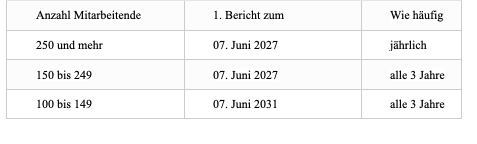
When and how often must employers prepare a pay transparency report in the future?
The decisive factor is the number of employees. Companies with fewer than 100 employees are exempt from the EU reporting obligation, but they can voluntarily prepare a report. Whether smaller companies in Germany will be included in the reporting obligation depends on the national implementation law. Regardless, it is advisable to engage with the EU pay transparency requirements now.
We support you in aligning your pay compliance with the new legal requirements to reduce compliance risks, avoid claims for performance-based pay, and ensure objective pay conditions.
tags: #Employment law #pay transparency #compliance #en